
Are You Risky?
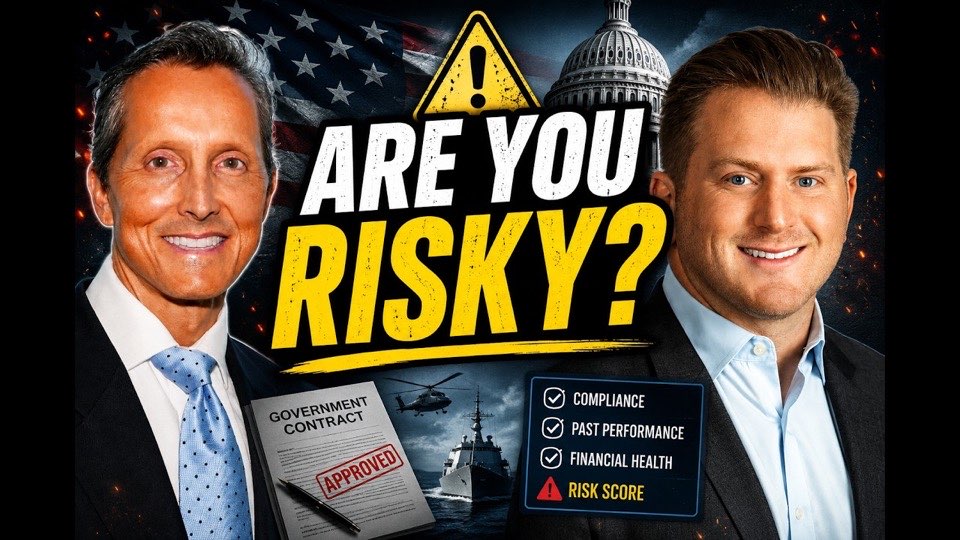
Tony Gray and Matthew Gillman walk through the credit risk factors banks and private credit review before lending to a government contractor: cash flow, receivables, profitability, debt, management, industry, concentration, backlog, collateral and the quality of your financial statements.
What is a lender actually trying to find out?
Matthew Gillman: Whether your company can support the capital being provided. It is a misconception that underwriting is the bank against the business owner. If a company cannot support the product, even if the bank said yes, the relationship will not end well. A lender is asking what you can repay, what you can afford, and what will actually benefit the business.
Why does cash flow come first?
Matthew Gillman: Because cash flow is the only way to truly repay a loan. You can refinance or raise equity, but repayment really comes from profit. If the amortization on a term loan is $100,000 a year, does the company generate $100,000 a year of profit to repay it? Lenders also want a cushion beyond that: extra profit that builds in the company and can absorb a drop in revenue.
Tony Gray: In simple terms, you are renting money. Can you pay the rent?
What is underwriting?
Matthew Gillman: Your loan application goes to the underwriting department: the people who review the information, run spreads, understand your company and decide whether you qualify.
Tony Gray: Underwriting is usually firewalled from the person you talk to, so the analysts stay objective. Your banker or relationship manager is your advocate, presenting your case to underwriting just as you would.
How do lenders look at accounts receivable?
Matthew Gillman: For government contractors and other service businesses, receivables are usually the largest asset: work you have completed and billed. Once you bill an invoice it moves onto your accounts receivable aging report, and it becomes an asset you can potentially borrow against.
Tony Gray: Cash flow is how a lender assesses the whole enterprise, for a business line of credit. Receivables may be what is assessed for something like a contract line of credit.
What is the difference between profitability, cash flow and EBITDA?
Matthew Gillman: They are aligned but mean different things. Profitability is whether you are making money. Cash flow is how much cash goes in and out, which depends on whether you collect what you earn as fast as you need to. Many companies are profitable on an accrual basis with no cash, because the faster they grow, the more receivables they carry and the longer they wait on their money. That is where a receivables line of credit can help.
EBITDA adds back certain items, such as interest and depreciation, to show what the business can afford. Depreciation is accounting, but interest only goes away if the debt does.
Tony Gray: EBITDA stands for earnings before interest, taxes, depreciation and amortization. It is one of the first things a banker or private credit lender will ask you for.
How does existing debt affect a new loan?
Matthew Gillman: Not all debt is bad. A lender wants to know what kind of debt you have and what it was for: an equipment loan, a bank line, a mortgage on real estate the business owns. What matters most is not the amount but the debt service, the monthly payments. If payments are too high for your cash flow and profitability, you may not be approved, and you should ask yourself whether to apply for more money or work with the capital you have.
Tony Gray: Lenders also look at who holds that debt, its terms, and whether the new facility will pay it off or add to it.
Why does the management team matter?
Matthew Gillman: A lender looks at each item and then at the whole risk profile. With management, it is about who is pushing which buttons and what their resume is. Has the owner done this before, and grown a company at this rate? Operations often break under fast growth, so who is your operations manager? Can HR handle the hiring? In many small businesses the owner and one other person wear every hat, and that is fine, but we want to see that they can. That ties into how long the company has been around and whether the industry aligns with the team’s background.
How do industry, concentration and backlog affect risk?
Tony Gray: Industry risk asks whether your sector is on a downward trajectory. For government contractors, federal spending changes over the past year and a half hit some agencies hard. Customer concentration is all your eggs in one basket: all your work with one agency, or one program executive office within the Navy, or one Fortune 500 customer on the commercial side. If that customer has a problem, so do you.
Backlog is the contracts you already hold. We want to see a waterfall, where periods of performance roll off gradually in the out years, not a sudden drop a year and a half out when everything ends at once.
Why does collateral matter if cash flow repays the loan?
Matthew Gillman: Cash flow supports repayment; collateral secures it. Lenders want collateral behind the money in case they ever have to work through a problem. In some industries only certain types of collateral exist, but it comes down to skin in the game: what the business and the owner put up to support the approval.
Tony Gray: It is the rainy-day question: if you could not pay, what could be sold to pay off the loan?
Why does the quality of financial statements matter?
Matthew Gillman: Quality of data is key. If things are not accounted for and posted correctly, neither you nor a third party can see what is going on: where cost of goods sold sits, what SG&A looks like, how things are categorized. A lender will never know your business the way you do, so the data shows both how the business looks and that you know it. The better you can answer questions and back up the answers, the more confidence a lender has.
Keeping the books right is not fun. But when a company is profitable it hides a lot of problems, and as soon as challenges arrive without the data, those problems surface quickly.
Read more on this
- What lenders actually underwrite, in the complete guide
- Won a government contract? What to do next
- Contract line of credit
This is an edited version of the conversation: spoken repetition is removed and each answer leads with its point. Every figure and example is as said in the episode. For financing specific to your business, talk to us.
Ready to fund your contract?
No obligation, talk to a govcon financing specialist, not a call center. We'll structure capital around your award.